Commercial Water Damage Restoration in Gainesville, GA
Water damage can interrupt a business without warning. A pipe failure may flood an office overnight, a roof leak can damage inventory, or an overflowing fixture can force part of a building to close. Every hour of disruption can affect employees, customers, tenants, production, and revenue.
Gainesville Water Damage provides commercial water damage restoration in Gainesville, GA, for offices, retail properties, warehouses, professional facilities, restaurants, apartment common areas, and other commercial spaces. We help businesses remove water, dry affected materials, and create a practical path toward reopening.
Commercial Water Damage Requires an Organized Response
Commercial properties often have larger floor areas, more complex mechanical systems, and stricter operational requirements than residential buildings. Water can spread through hallways, shared walls, ceiling systems, elevators, storage rooms, and multiple tenant spaces.
A successful response must consider:
- Employee and customer safety
- Electrical and mechanical equipment
- Inventory and business records
- Tenant communication
- Access restrictions
- Food, medical, or sanitation requirements
- Building security
- Insurance documentation
- Business operating hours
- Coordination with property management
- Repairs needed before reopening
The cleanup plan should reduce disruption whenever possible without compromising safety or proper drying.
Businesses We Help
Commercial water damage can affect nearly any type of property, including:
- Office buildings
- Retail stores
- Restaurants
- Medical and professional offices
- Warehouses
- Manufacturing spaces
- Schools and daycare facilities
- Churches
- Fitness centers
- Apartment and condominium common areas
- Hotels
- Auto dealerships
- Financial institutions
- Storage facilities
- Municipal and public buildings
Each property has different priorities. A retail store may be focused on protecting inventory and reopening the sales floor. An office may need to preserve documents and computer equipment. A restaurant must consider food safety, sanitation, and kitchen operations.
Common Causes of Commercial Water Damage
Commercial properties may experience water damage from:
- Broken plumbing lines
- Failed sprinkler systems
- Roof leaks
- Storm water intrusion
- Sewage backups
- Overflowing toilets and sinks
- Water heater failures
- Mechanical system leaks
- Refrigeration and ice machine lines
- Drainage problems
- Damaged windows or exterior doors
- Plumbing failures in neighboring units
- Construction or maintenance accidents
Some problems are discovered immediately. Others occur overnight, during weekends, or inside mechanical rooms where water can spread unnoticed.
Our Commercial Restoration Process
Initial Assessment and Priorities
We begin by identifying the source of the water, affected areas, safety concerns, and operational priorities.
Property managers and business owners can help by identifying critical spaces, sensitive equipment, inventory, tenant responsibilities, and areas that may need to remain accessible.
Containment and Access Control
Affected areas may need to be separated from employees, customers, patients, or tenants. Signs, temporary barriers, or containment may be used based on contamination and building conditions.
The CDC recommends closing off affected areas during cleanup following sewage intrusion, flooding, and other water related emergencies in healthcare environments. The same general principle of controlling access can be useful in many occupied commercial buildings. ([CDC][12])
Water Extraction
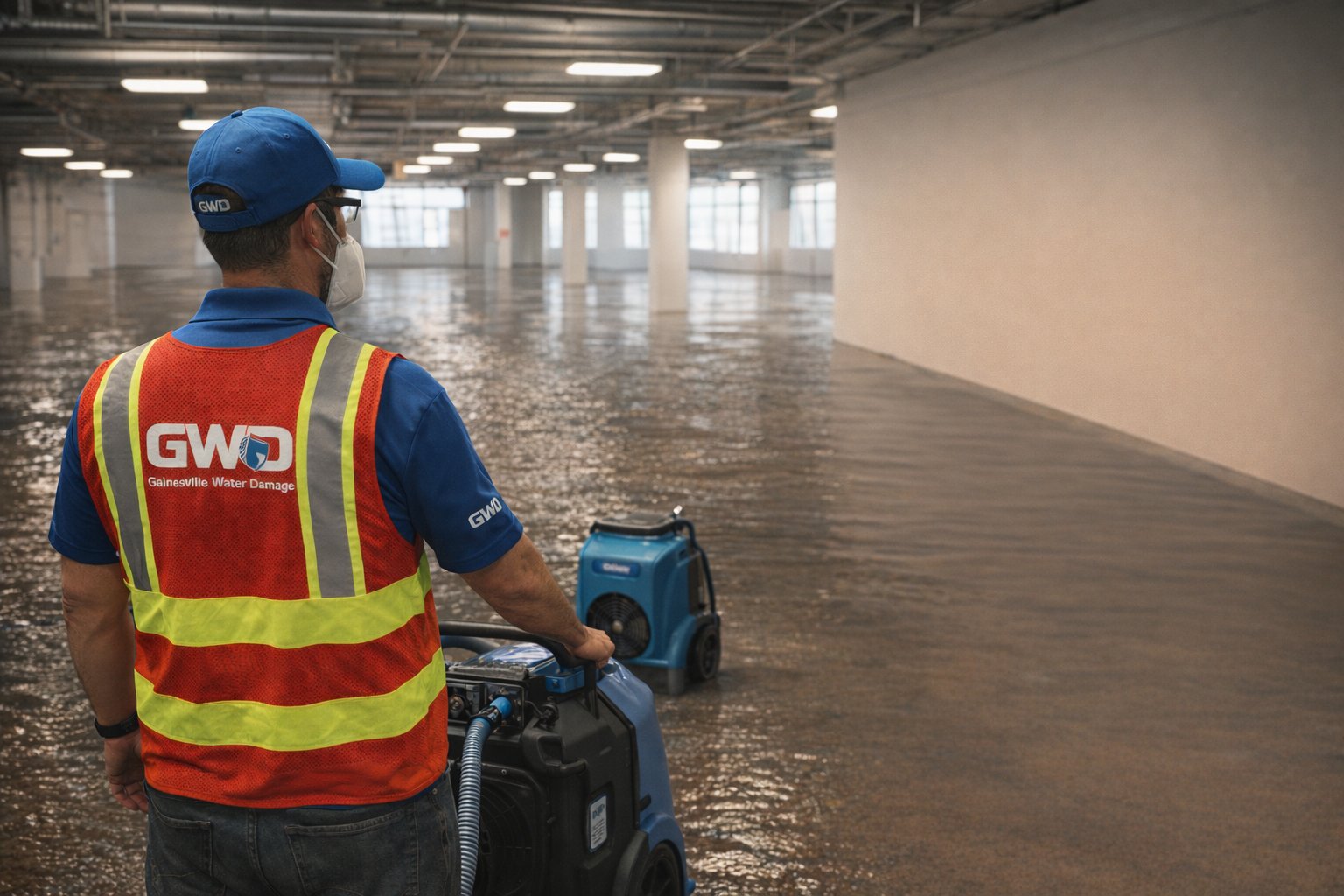
Standing water is removed using commercial extraction equipment. Large open areas, carpeted offices, hallways, concrete floors, and hard surface flooring may require different extraction methods.
Rapid removal can reduce migration into adjoining spaces and shorten the structural drying phase.
Moisture Mapping
Commercial buildings often contain layered wall systems, drop ceilings, insulation, carpet tiles, raised floors, and enclosed utility spaces. Moisture mapping helps identify where water traveled and establishes a record of affected areas.
Readings may be taken throughout the project to monitor progress and guide equipment placement.
Material Evaluation and Removal
Water damaged ceiling tiles, drywall, insulation, flooring, and other materials are evaluated for cleanliness, structural condition, and drying potential.
Contaminated or heavily damaged materials may require controlled removal. Salvageable materials may remain in place when they can be cleaned and dried properly.
Drying and Dehumidification
Commercial air movers and dehumidifiers are positioned according to the layout and moisture conditions. Large spaces may require multiple drying zones.
Drying equipment should not be placed randomly. Airflow must reach wet materials without creating unnecessary disruption or spreading contamination.
The EPA provides specific guidance for responding to commercial water damage within 24 to 48 hours to help reduce the need for mold remediation. ([US EPA][4])
Cleaning and Restoration Planning
Affected surfaces are cleaned based on water quality and building use. Once drying is complete, we help identify areas that require repair, replacement, painting, flooring work, or reconstruction.
Reducing Business Interruption
Not every water loss requires the entire building to close. When conditions allow, work can be divided into zones so unaffected areas stay accessible while damaged rooms are dried, cleaned, and repaired.
Useful steps may include isolating the damaged area, protecting inventory, setting safe walkways, drying critical rooms first, and keeping managers or tenants informed. Safety, sanitation, and building conditions determine whether partial operations are appropriate.
Protecting Inventory, Equipment, and Records
Business property should be moved away from water when it can be done safely. Photograph equipment, furniture, records, inventory, and building materials before disposal, and keep receipts and project records connected to emergency work.
Electronic equipment should be disconnected only when it is safe. Wet electronics should be evaluated by an appropriate specialist before being powered on.
Insurance and Project Documentation
Commercial claims can involve the building owner, tenant, property manager, insurance carrier, and multiple service teams. Clear photographs, moisture maps, drying records, lists of affected materials, and repair estimates help keep everyone informed.
Coverage varies according to the policy, cause of loss, maintenance history, and building responsibilities. Restoration service teams can document the work performed but cannot determine insurance coverage.
Commercial Water Damage Help in Gainesville
Your business needs more than water removal. It needs a restoration plan that considers safety, operations, communication, and the condition of the building.
Gainesville Water Damage provides commercial water damage restoration in Gainesville, GA, with a practical approach to extraction, drying, cleanup, and documentation. We work to help you understand what is affected and what must happen before the space can return to normal use.
Begin Your Commercial Water Damage Recovery
Water can continue spreading through flooring, walls, ceilings, and adjoining units after the original source is stopped. Early inspection and extraction can help reduce further damage and provide a clearer recovery plan.
Contact Gainesville Water Damage for commercial water damage restoration in Gainesville, GA. We will help evaluate the loss, remove standing water, dry affected materials, and move your business toward safe, efficient reopening.