Water damage is never just about water. It's the flooring that starts to swell, the ceiling stain that keeps spreading, the furniture you have to drag out of the room, and the space your family or business suddenly can't use anymore.
Gainesville Water Damage provides water damage restoration in Lula, GA, and we handle the whole process — removing standing water, tracking down hidden moisture, drying the structure, cleaning up the damage, and repairing what's left behind.
Lula sits at the crossing point of Hall and Banks counties, where several state and federal routes come together. We help homes, rental properties, businesses, and other buildings throughout the community bounce back from water emergencies.
Getting You Back to Normal Is the Whole Point
When people call us after water damage, they're not really asking about extraction equipment. They're asking how they get their home or business back.
So we try to give a clear path from that first inspection all the way to the last repair.
We move fast, because water keeps spreading and doing damage the longer it sits. But we also move carefully, because rushed or incomplete drying tends to cause bigger problems down the road.
At the end of it, the goal is simple: the room should look right, work right, and stop feeling like a water-damaged space.
What Usually Causes Water Damage in Lula
Sometimes it's obvious — a burst pipe, an overflowing toilet. Other times it builds slowly behind a wall or under an appliance until it's impossible to ignore.
The usual suspects: leaking supply lines, aging or damaged plumbing, water heater failures, washing machine hoses, dishwasher leaks, refrigerator lines, roof leaks, overflowing fixtures, basement water, sewage backups, and storm intrusion.
Whatever the cause, it has to be stopped before real restoration can happen. Depending on the situation, that might mean calling in a plumber, roofer, appliance tech, septic service, or utility provider first. Once that source is handled, we take care of everything the water left behind.
Full-Service Water Damage Restoration
Water Extraction
Professional-grade equipment pulls standing water out of floors, carpet, basements, and anywhere else it's collected. The more water we extract mechanically, the less has to evaporate out later — which means faster, more thorough drying.
Structural Drying
Air movers and dehumidifiers go to work on flooring, walls, ceilings, and any other affected material, with moisture readings tracking progress the whole way through.
Burst Pipe Cleanup
We check the area around the break itself, then work outward — connected rooms, walls, ceilings, flooring — to see how far the moisture actually traveled.
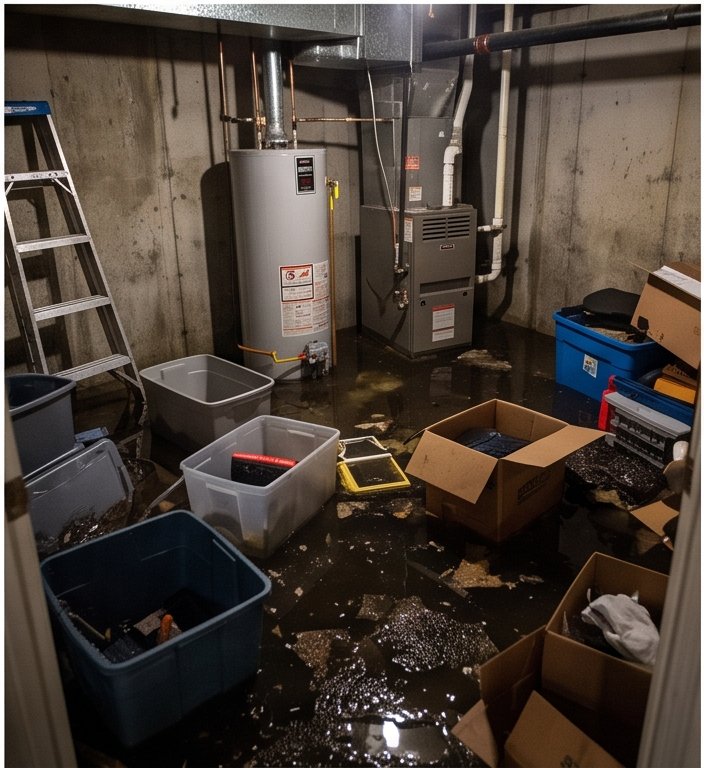
Basement Flood Cleanup
Basements often hold stored items, mechanical equipment, flooring, drywall, and finished living space. We look at the whole area, not just the spot with the deepest water.
Sewage Backup Cleanup
Sewage water can carry waste and harmful bacteria, and materials that soak it up may need to be thrown out rather than dried. The CDC recommends avoiding contact with floodwater that could contain sewage, and using protective gear if entry can't be avoided — we take that seriously.
Storm Water Damage
We handle the interior — removing water, inspecting materials, starting the drying process — while the roof, drainage, window, or foundation issue that let the water in gets fixed separately.
Commercial Restoration
For businesses, we factor in employees, customers, equipment, inventory, and daily operations, not just the water itself.
Why Water Damage Is Harder to Spot Than You'd Think
Water rarely stays put in the room where it started.
It travels under flooring, follows plumbing lines, moves through the framing, and pools inside wall cavities. Water from an upstairs bathroom can show up as a ceiling stain several feet away from where it actually got in.
That's exactly why a proper moisture inspection matters. Fixing the visible stain and calling it done can leave soaked materials hidden inside the walls, quietly causing problems for months. We check the surrounding area and use moisture readings to figure out exactly where drying needs to happen — not just where the damage happens to be visible.
How the Restoration Process Actually Works
Inspect. We walk the property, identify the water source, figure out which rooms are affected, and flag any safety concerns.
Extract. Standing water comes out. Wet belongings may get moved, and we take stock of what's been damaged.
Evaluate. Materials that are clean and structurally sound get dried in place. Anything severely swollen, contaminated, crumbling, or unstable typically needs to come out.
Dry. Drying equipment gets set up based on the layout of the space. The EPA recommends drying water-damaged areas within roughly 24 to 48 hours when possible, and that timeline drives how quickly we get equipment in place.
Clean and repair. Once moisture levels drop, we clean the affected surfaces and move into repairs to restore how the room looks and functions. FEMA's flood restoration guidance covers this same sequence — removing damaged materials, cleaning, ventilating, and drying the building thoroughly — and it's the same approach we follow.
Repairs Aren't an Afterthought
Getting the water out solves the emergency, but it doesn't put back the drywall, flooring, insulation, trim, or ceiling material that got ruined.
We see the job through to actual repairs, so you're not left staring at an unfinished room for weeks. Some projects only need minor drywall and paint touch-ups. Others call for new flooring, insulation, baseboards, ceiling materials, cabinets, or bigger structural work. Either way, we explain what's needed and get the repairs moving so your property gets back to normal use.
Protecting Yourself and Your Property
Don't walk through water that might be touching outlets, appliances, wiring, or electrical equipment.
Stay away from sagging ceilings and unstable flooring, and keep kids and pets out of any area affected by sewage or outdoor floodwater.
Take photos of the damage before you start moving belongings, and hang onto receipts and records related to any emergency work — insurance coverage depends on your policy and the source of the water, and clear documentation makes that conversation a lot easier.
Water Damage Help That Actually Makes Sense
Restoration terminology gets confusing fast, especially when you're already stressed about your home or business. We explain things plainly — where we found moisture, what can be saved, what has to go, and how we'll repair the space — without piling on jargon you don't need.
We treat your property like a place that needs to work again for you, not just another job to check off a list.
Restore Your Lula Property
Contact Gainesville Water Damage for water damage restoration in Lula, GA. We'll get the water out, dry the structure completely, clean up the affected areas, and repair the visible damage.
Our goal is simple — make the space feel like the water emergency never happened, and get you back to your normal routine as fast as we responsibly can.