Emergency Water Extraction in Gainesville, GA
Standing water can damage a property quickly. It can spread beneath flooring, soak drywall, enter cabinets, and move into nearby rooms before the full extent of the problem is obvious. When a pipe breaks, a water heater fails, or a room suddenly floods, removing the water should be one of the first priorities.
Gainesville Water Damage provides emergency water extraction in Gainesville, GA, for homes and properties affected by sudden plumbing leaks, appliance failures, flooding, and other water emergencies. We focus on removing standing water efficiently while evaluating where moisture may have traveled.
Why Fast Water Extraction Matters
The longer water remains inside a building, the more opportunity it has to soak into porous materials. Carpet, padding, drywall, insulation, wood, and cabinetry can absorb moisture even when standing water is only present for a relatively short period.
Quick extraction may help:
- Limit the spread of water
- Reduce absorption into flooring and walls
- Protect materials that may still be salvageable
- Make structural drying more effective
- Reduce lingering odors
- Lower the likelihood of mold growth
- Allow repairs to begin sooner
The EPA advises that wet and damp materials should generally be dried within 24 to 48 hours when possible. Rapid water removal is an important first step, but extraction must be followed by proper drying and moisture monitoring. ([US EPA][4])
Water Extraction Is More Than Removing Puddles
A mop, towels, or a small household wet vacuum may remove water from the surface, but they usually cannot address a significant water loss. Water can move through carpet seams, beneath floating floors, behind baseboards, and into the spaces between walls.
Professional extraction equipment is designed to remove larger quantities of water and pull moisture from carpeting and other surfaces. After extraction, moisture detection equipment helps determine whether additional areas require drying.
Emergency water extraction may be needed after:
- A burst or leaking pipe
- An overflowing toilet, bathtub, or sink
- A failed water heater
- A leaking refrigerator or ice maker line
- A washing machine overflow
- A dishwasher leak
- A roof leak during heavy rain
- Basement flooding
- Fire suppression or sprinkler discharge
- Storm water entering the property
What Happens During Emergency Water Extraction?
The exact process depends on the type of water, the amount present, and the materials affected.
Identifying the Source
Before extraction begins, the water source should be stopped or controlled whenever possible. This may involve shutting off a fixture, appliance connection, plumbing valve, or the main water supply.
If the source cannot be safely reached, a plumber or utility provider may be needed. Restoration work is much more effective after the active flow of water has stopped.
Evaluating Safety Conditions
Water and electricity are a dangerous combination. The affected area should be evaluated for electrical risks, unstable ceilings, contaminated water, and damaged building materials.
Do not enter standing water when electrical outlets, appliances, wiring, or extension cords may be involved. Do not turn lights or appliances on or off while standing in water.
Extracting Standing Water
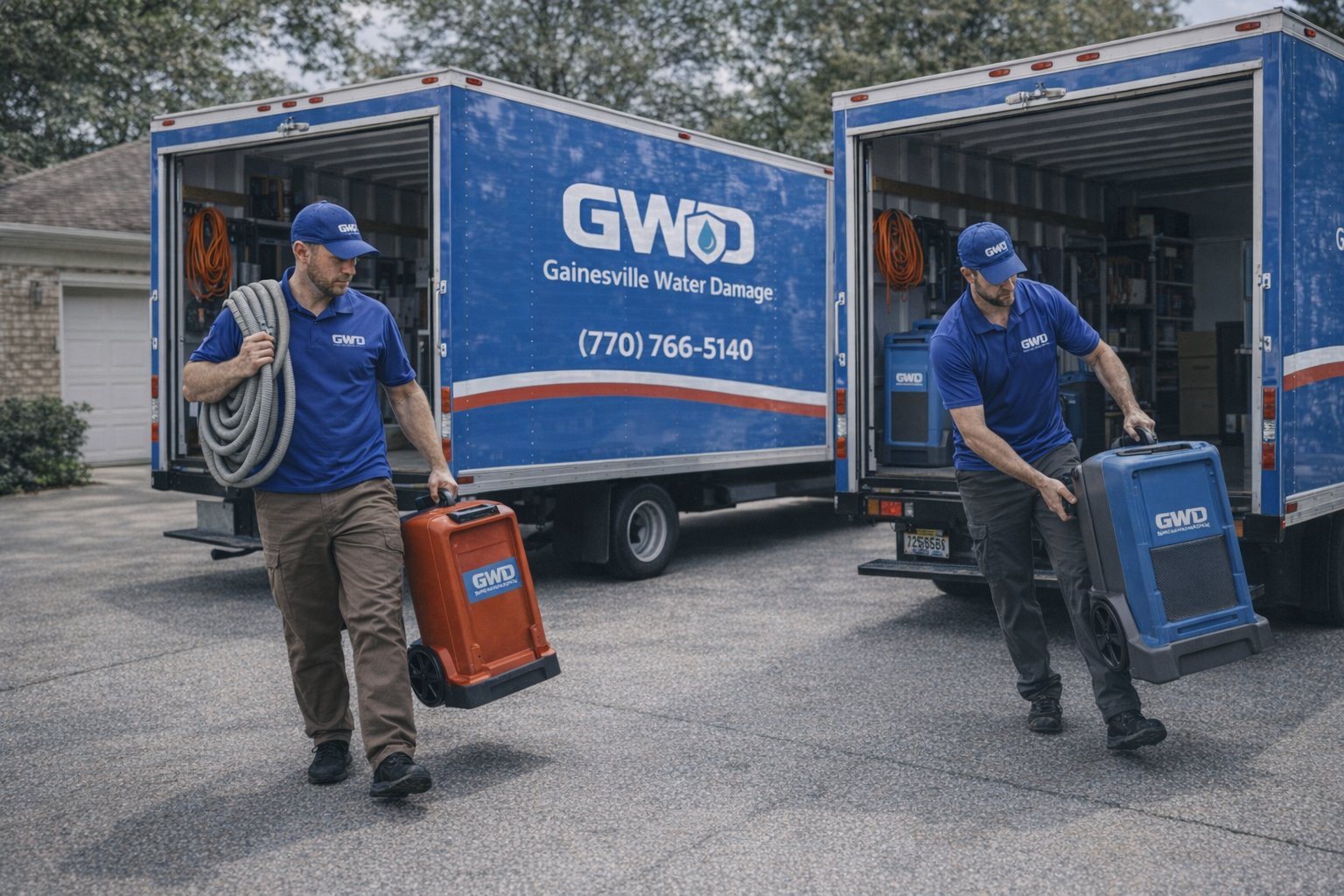
Professional extraction equipment is used to remove standing water from affected rooms. Different tools may be used for carpet, hard surface flooring, basements, or confined areas.
Removing as much water as possible through extraction can shorten the amount of time required for evaporation and dehumidification.
Checking for Hidden Moisture
Once the visible water is gone, the property may still be wet. Moisture readings can help identify water beneath flooring, behind trim, inside drywall, or around cabinets.
This step is essential because hidden moisture is often responsible for delayed odors, staining, swelling, and mold concerns.
Beginning Structural Drying
Air movers and dehumidifiers may be installed to dry the building materials and manage indoor humidity. Equipment may need to operate for several days, depending on the depth of moisture and the materials involved.
Drying progress should be checked periodically so equipment can be adjusted as conditions change.
Different Water Sources Require Different Precautions
Water from a broken drinking water supply line may initially be considered cleaner than water from an overflowing toilet, sewage line, or outside flood. However, any water can pick up contaminants after moving through flooring, wall cavities, soil, or dirty surfaces.
Water containing sewage or outdoor runoff should not be handled as ordinary household water. Children, pets, and anyone with respiratory or immune system concerns should remain away from contaminated areas.
The CDC recommends wearing rubber boots, gloves, and goggles when contact with flood water cannot be avoided. It also advises washing contaminated clothing with hot water and detergent before reuse. ([CDC][5])
What Should You Do While Help Is on the Way?
If it is safe, shut off the water source and move unaffected belongings away from the wet area. Place furniture legs on blocks or foil only when you can do so without entering unsafe water.
Take photographs and videos before moving or discarding damaged property. Documentation can help create a clearer record for your insurance carrier.
Avoid the following:
- Do not use a standard household vacuum on water
- Do not enter rooms with sagging ceilings
- Do not handle sewage without protective equipment
- Do not place fans in contaminated water
- Do not assume flooring is dry because the surface looks dry
- Do not delay reporting a potentially covered loss
Extraction and Restoration Are Not the Same Service
Water extraction removes standing water. Water damage restoration addresses the remaining moisture and damage.
After extraction, the property may still require:
- Structural drying
- Dehumidification
- Removal of damaged drywall or insulation
- Carpet or flooring evaluation
- Cleaning and disinfection
- Odor control
- Mold evaluation
- Repairs and reconstruction
Stopping after extraction can leave moisture trapped inside materials. A complete evaluation helps determine what additional work is needed.
Emergency Water Extraction for Gainesville Properties
Homes in Gainesville can experience water emergencies from plumbing problems, severe rain, appliance failures, and overflowing fixtures. Whatever the cause, the first few steps can shape the entire recovery process.
Gainesville Water Damage provides emergency water extraction in Gainesville, GA, with a focus on clear communication and thorough moisture evaluation. We help remove the immediate water and explain what must happen next to dry the property properly.
Get Help with Standing Water
Standing water should not be ignored or left to dry on its own. Water can continue spreading after the original leak has stopped, especially beneath flooring and behind walls.
Contact Gainesville Water Damage for emergency water extraction in Gainesville, GA. We will help evaluate the damage, remove standing water, locate hidden moisture, and begin the drying process.