Water Damage Restoration in Gainesville, GA
Water damage rarely happens at a convenient time. A leaking appliance may soak the kitchen while you are away, a plumbing failure can send water through several rooms, or heavy rain can enter through the roof, foundation, or lower level of your home. No matter how the problem starts, acting quickly can make a major difference in how much of the property can be saved.
Gainesville Water Damage provides water damage restoration in Gainesville, GA, for homeowners and property managers dealing with leaks, flooding, and unexpected moisture. Our goal is to help you regain control of the situation, remove the water, dry the affected areas, and prepare the property for the repairs needed to make it feel normal again.
Water Damage Can Spread Beyond What You See
Visible standing water is only part of the problem. Water can travel beneath flooring, behind baseboards, into wall cavities, and through insulation. A room may look dry on the surface while moisture remains trapped inside materials.
That hidden moisture can lead to swollen wood, loose flooring, damaged drywall, staining, unpleasant odors, and microbial growth. The Environmental Protection Agency recommends drying wet materials as quickly as possible, ideally within 24 to 48 hours, to reduce the likelihood of mold growth. ([US EPA][1])
Professional water damage restoration is not simply a matter of removing visible water. It involves finding where the moisture traveled, determining which materials may be saved, and creating a drying plan for the entire affected area.
Common Causes of Water Damage in Gainesville Homes
Water damage can come from many sources. Some problems are sudden and obvious, while others develop slowly behind walls or beneath floors.
Common causes include:
- Broken or leaking plumbing lines
- Overflowing sinks, tubs, or toilets
- Washing machine and dishwasher leaks
- Water heater failures
- Roof leaks and damaged flashing
- Air conditioning drain problems
- Basement flooding or crawl space flooding
- Storm water damage entering around doors or windows
- Sewage backups
- Fire sprinkler discharge
- Slow leaks inside cabinets or walls
Even a relatively small plumbing leak can affect a large area when water continues flowing unnoticed. Calling for help as soon as the damage is discovered can reduce additional deterioration and simplify the restoration process.
Our Water Damage Restoration Process
Every property and water loss is different. The restoration plan should be based on the source of the water, the amount of moisture present, the materials affected, and how far the water has traveled.
Inspection and Moisture Assessment
The first step is understanding what happened. We inspect the visible damage, identify affected rooms, and look for moisture that may have spread beyond the obvious area.
Moisture meters and other detection methods may be used to evaluate drywall, flooring, trim, cabinets, and structural materials. This helps create a more complete drying plan instead of focusing only on the water that can be seen.
Water Removal
Standing water is removed using professional extraction equipment. Removing water quickly helps limit absorption into porous materials and allows structural drying to begin.
Depending on the situation, extraction may be performed on carpeting, hard surface flooring, basements, utility rooms, or other affected spaces.
Removal of Unsalvageable Materials
Some materials can be dried and cleaned. Others may need to be removed because they are badly damaged, contaminated, or unlikely to dry properly.
Wet drywall, insulation, carpet padding, trim, and damaged flooring are evaluated individually. We do not believe in removing materials unnecessarily, but leaving severely damaged materials in place can interfere with proper drying.
Structural Drying and Dehumidification
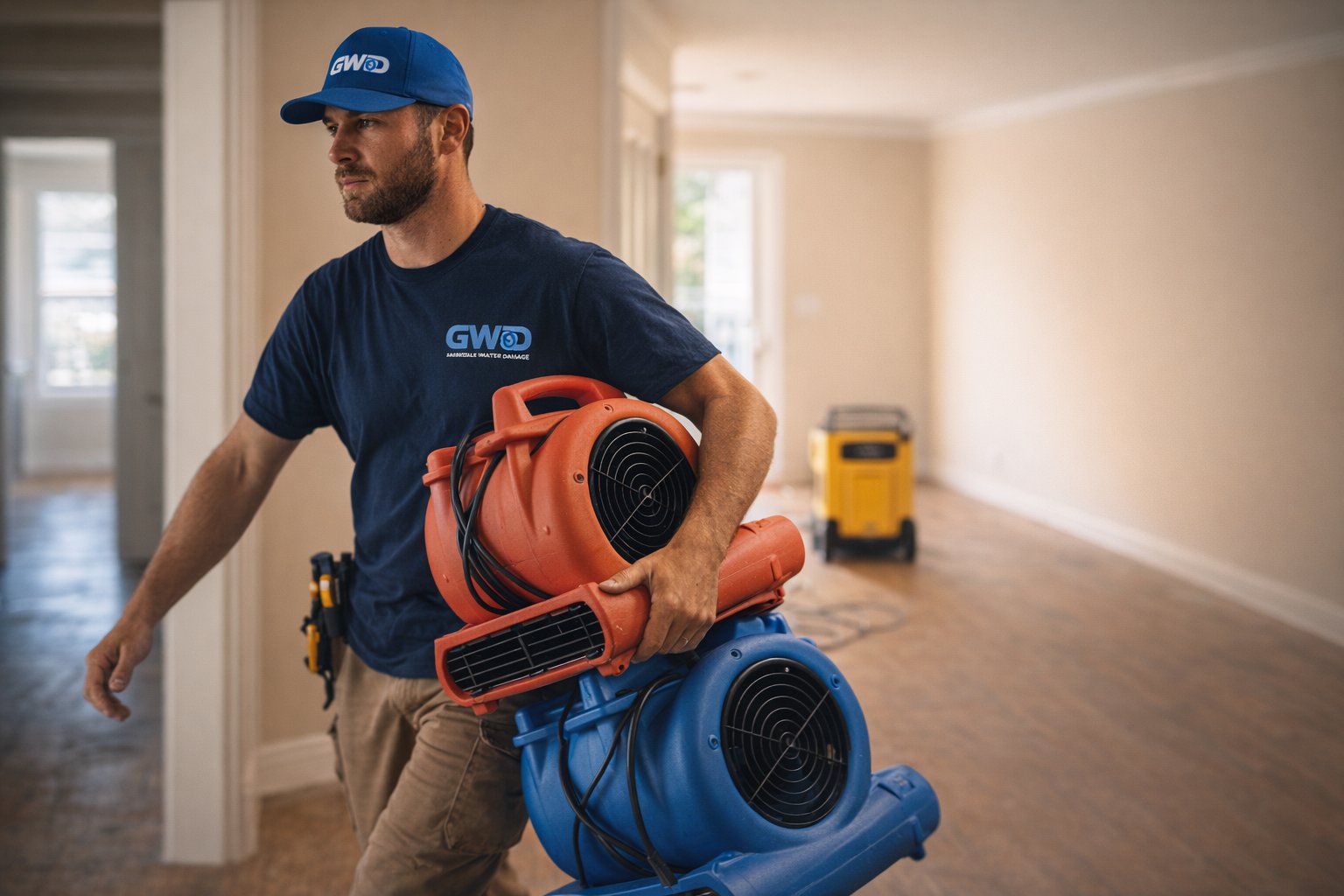
After standing water is removed, air movers and dehumidification equipment may be positioned throughout the affected area. These systems help move moisture out of walls, floors, framing, and indoor air.
Equipment placement depends on the size and layout of the property. Drying progress should be monitored rather than judged only by appearance. Materials that feel dry on the surface may still contain elevated moisture internally.
Cleaning and Preparation for Repairs
Affected surfaces may require cleaning, deodorizing, or treatment based on the source of the water and the condition of the property. Once drying is complete, damaged areas can be prepared for repairs and reconstruction.
Effective restoration includes airing out, moving items out, removing damaged materials, cleaning, and thoroughly drying the building.
Clean Water and Contaminated Water Require Different Responses
Not every water damage situation should be handled the same way. Water from a supply line is different from water containing sewage, outside runoff, or unknown contaminants.
Clean water can become increasingly unsanitary when it remains in contact with building materials, dirt, or other contaminants. Flood water and sewage require additional precautions, protective equipment, controlled removal, and more extensive cleaning.
The Centers for Disease Control and Prevention warns that flooded properties may contain mold or sewage and recommends taking appropriate safety precautions before entering or cleaning the affected area. ([CDC][3])
What to Do After Discovering Water Damage
Your safety should come first. Do not enter an area where water may be in contact with electrical outlets, appliances, extension cords, or the electrical panel. Avoid walking through water from a sewage backup or an unknown outside source.
When it is safe to do so:
- Stop the water source if possible
- Move valuables away from the affected area
- Take photographs of visible damage
- Avoid using ordinary household vacuums
- Contact a water restoration company
- Notify your insurance carrier when appropriate
- Do not discard important damaged items before documenting them
Coverage depends on your individual policy, the source of the water, and the circumstances of the loss.
Local Water Damage Help You Can Understand
Dealing with water damage can feel overwhelming, especially when you are unsure what is wet or what needs to be removed. You deserve straightforward information about the condition of your property and the steps needed to dry it.
Gainesville Water Damage focuses on practical solutions for homes and properties in Gainesville. We look beyond the visible puddle, explain what we find, and help move the property from water removal through drying and cleanup.
Schedule Water Damage Restoration in Gainesville, GA
Waiting to address water damage can allow moisture to spread farther into walls, flooring, cabinets, and structural materials. The earlier the affected areas are evaluated, the sooner water removal and drying can begin.
Contact Gainesville Water Damage for water damage restoration in Gainesville, GA. We will help assess the situation, remove unwanted water, dry affected materials, and guide you through the next steps toward restoring your property.